
A new website for PhD courses in Denmark was launched first September 2012 to provide a better overview of the many PhD courses the Danish universities offer individually and in cooperation with each other. I thought I would just mention it to you, though it is not dedicated to design research especially. However, the Royal Danish Academy of Fine Arts, School of Architecture, Design and Conservation ( KADK) will soon upload information about its own courses. For instance, it can be a good place to source academic writting if not topic related trainings.
Showing posts with label Posted by Aurélie. Show all posts
Showing posts with label Posted by Aurélie. Show all posts
Monday, 3 September 2012

Monday, 19 March 2012
Fashion & Textile UK research students networking
This is the fifth year of the association’s annual event to support and provide active networking opportunities for UK M Phil and Ph D students engaged in fashion and/or textiles and fashion and textile related research.
• The next event will be held on Wednesday 2 May 2012 at BIAD (Birmingham Institute of Art & Design), BCU (Birmingham City University)
• Each participant will be allocated 10 minutes for a power point presentation to introduce your research and facilitate discussion.
• It’s a great opportunity to network and develop research synergies.
• You are eligible to attend from enrolment to one year on following completion.
• This is a free event contributing to the Fashion & Textile Courses Association’s support for emerging researchers. A light lunch and refreshments will be provided courtesy of BIAD.
To book, you need to submit an abstract by the 25th of april. For further details, please get in touch with marlene.little@bcu.ac.uk
• The next event will be held on Wednesday 2 May 2012 at BIAD (Birmingham Institute of Art & Design), BCU (Birmingham City University)
• Each participant will be allocated 10 minutes for a power point presentation to introduce your research and facilitate discussion.
• It’s a great opportunity to network and develop research synergies.
• You are eligible to attend from enrolment to one year on following completion.
• This is a free event contributing to the Fashion & Textile Courses Association’s support for emerging researchers. A light lunch and refreshments will be provided courtesy of BIAD.
To book, you need to submit an abstract by the 25th of april. For further details, please get in touch with marlene.little@bcu.ac.uk
Wednesday, 4 January 2012
Out of Control - 8th International Conference on Design & Emotion
London 11–14 September 2012
The organising committee of the 8th International Conference on Design & Emotion is very pleased to invite you to participate in this event. This conference is a forum held every other year where practitioners, academics and industry leaders meet and exchange knowledge and insights concerning the cross-disciplinary field of design and emotion.
We are looking for researchers, academics and practitioners to submit proposals.
Conference Topic
While Design &Emotion is the overarching focus of the conference–allowing us to consider all aspects of the relationship between human experience and design understood in its widest senses–the theme this year is "Out of Control".
For a number of years, uncertainty, crisis and chaos have been keywords describing the experience of many of us. A world driven by uncertainty, crisis and chaos demands different responses from design (as a community, a practice and a process). On one hand we can mitigate against these designing systems which can withstand, or manage, the challenges they produce. Here there is a focus upon design as a "problem solving" activity. On the other, we can use them as springboards to a creative future. In this way, design as "opportunity mapping" becomes important.
We would like to encompass both of these approaches to design and to examine how they impact upon, or are generated by, the whole spectrum of human emotion experienced at the macro (socio-cultural), micro (personal), meta (philosophical), processural (methodological) and strategic levels.
This conference is open to any theoretical, empirical or methodological work on Design & Emotion and we are particularly interested in receiving papers from researchers, academics and practitioners in the following topic areas (though they are by no means exhaustive and other work relevant to the theme will be considered):
SOCIETY/CULTURE
Socially Responsive/
Responsible Design
Design for Behavioural Change
Design & Space/Environment
Design for Digital Media
Corporate Social
Responsibility
THE SELF/THE OBJECT
Design & Identity
Design & Well-Being
(incl. food, healthcare & love)
Design & Illusion,
Fake & Fraud
User Experience
(inc. Human Factors & HCI)
Experience Design
THE PHILOPHICAL
Design without Emotion
Design, Affect & the Materiality of Experience
Design, Magic & Enchantment
PROCESSES, METHODOLOGIES, TOOLS & METHODS
Research Methodologies
Theoretical Foundations
Empirical Approaches
DESIGN, STATEGY & INNOVATION
Design & the Future (foresight/trends)
Designing Services Business Experience Branding
Deadlines
1 February 2012 -Papers & Case Study submissions
1 May 2012 -Workshops/Masterclasses submissions
Further details on the conference website
Thursday, 22 December 2011
Vacant PhD scholarship "Complex Modelling"
Though it is not specifically related to textiles, I thought I would just mention this great opportunity for PhD studentship as it might interest some of our architects and digital crafting friends. The PhD will take place at CITA, Centre for IT & Architecture, The Royal Danish Academy of Fine Arts, School of Architecture from the 1rst of April 2012. The Scholarship is for 3 years and fully funded. The position is placed within the framing research topic Complex Modelling.
A bit more content is provided below with introduction to the context of research but for full details about the application please visit this link.
Applications are to be handed in no later than Wednesday 1 February 2012 at 12.00 noon.
A bit more content is provided below with introduction to the context of research but for full details about the application please visit this link.
Over the last 30 years, we have witnessed a large-scale digitisation of archictectural practice. Contemporary architecture is almost exclusively produced using digital tools, and the computer has become a key tool in the way architecture is thought of, designed and produced. Today, digital tools have an impact on architecture on the most simple level to the most complex one. If on the one hand, the computer is a simple drawing tool that we use to represent our surroundings, its is on the other hand also the medium through which we seek solutions to complex contemporary issues that our society faces. It is through these digital tools and their potential to compute large amounts of data with a high degree of complexity that we as a knowledge society seek to find solutions to the urbanisation of mega-cities, globalisation and sustainability.
This shift has placed new demands on our represenation forms. The new information models that are able to actively calculate the economic, environmental and spatial effects of a proposal, have transformed architectural representation into a dynamic and flexible medium that is able to interface directly with outside knowledge fields. However, information models also have there own inherent problems. They become larger because they contain data from the many practices that constitute the construction industry, they become longer because they are expanded to include several of the building phases and they become deeper because the specific volumes of information, which the models must be able to handle, are growing.
This results in a dramatic increase in complexity, and leads us to question the fundamental ways in which information models are organised. If we as architects and engineers must work with large datasets and must be able to simulate and analyse these in ways that make sense, it is necessary that we consider how these models may be presented.
Today, information models are reproduced in accordance with architecture’s traditional development in three dimensions. As an automation of plans and section views, the 3D model serves as a continuation of the traditional architectural drawing hall. This PhD project will explore how other forms of information organisation may help to create intelligent tools for architectural design, analysis and realisation. To manage these digital models concretely and optimally, it is essential to have a critical understanding of how parametric and generative computer models may be developed and monitored.
Applications are to be handed in no later than Wednesday 1 February 2012 at 12.00 noon.
Wednesday, 14 December 2011
The Role of Material Evidence in Architectural Research: Drawings, Models, Experiments

The Role of Material Evidence in Architectural Research: Drawings, Models, Experiments, by Anne Beim and Mette Ramsgaard Thomsen is one of the recent publications of the Royal Danish Academy of Fine Arts, School of Architecture, Design and Conservation discussing what is regarded as valid evidence in arhcitectural research and how to evaluate these materials.
The publication gathers the results of the debates initiated during the seminar of the same name organized at the school in November 2010. It gathers texts and interviews from guest researchers as for instance Jonathan Hill discussing Design Research as a 500 hundred years tradition or Yeoryia Manolopoulou talking about Enaction Drawing. The book is also an introduction to on-going PhD projects at the school which range 'from tectonic inquiries into material qualities and properties to computational crafting and model making, to the creation and testing of theoretical models for simulation or articulation of tectonic principles in ordered pictograms'. A modest but rich contribution to the debate of practice-based research methodology.
With contributions by
Researchers
Jonathan Hill, Yeoryia Manolopoulou, Peter Bertram, Billie Faircloth, Karin Søndergaard, Merete Madsen, Mikkel Kragh
PhD Students
Anne-Mette Manelius, Aurélie Mossé, Peter Andreas Sattrup, Ofri Earon, Nanet Krogsbæk Mathiasen, Jacob Riiber Nielsen, Søren Nielsen, Johannes Rauff Greisen, Jan Schipull Kauschen, Cecilie Bendixen, Tore Banke
Thursday, 10 November 2011
New materials within a design professional and sustainable frame of reference.
Call for PHD fellowship
Kolding School of Design invites applications for a PhD Fellowship starting 1 February, 2012 or as soon as possible after that date. The fellowship has a three year duration and is in the field:
Kolding School of Design invites applications for a PhD Fellowship starting 1 February, 2012 or as soon as possible after that date. The fellowship has a three year duration and is in the field:
New materials within a design professional and sustainable frame of reference.
The position will be affiliated with the future doctoral school under the auspices of the Architect and Design Schools with place of employment at Kolding School of Design, Department of Product Design.
The project will contribute to building knowledge of new materials in a broad design sense within a sustainable frame of reference. The Department of Product Design comprises three specialist domains, Fashion, Textile, and Industrial Design, and sustainability represents one of the school’s strategic target areas.
New knowledge in this field intends to strengthen creativity and innovation in terms of education and practice, contribute to renewed self-understanding, and support design solutions to the many future challenges of product design.
The application should investigate the significance of new materials on design practice. The investigation should relate to relevant, existing, international research environments that work with material knowledge at the most advanced professional level. Moreover, in terms of methodology, the project should connect to action research and/or practice-oriented research traditions such as e.g. research-through-design. Furthermore, the application should explicate how the contribution will support the development of the three specialist domains of the department, including how it will strengthen the future development of design practice and create renewed professional self-understanding.
The Application:
There is no application form. The application must be in writing in Danish, Norwegian, Swedish or English and allow for the appointment committee to be able to assess the applicant’s qualifications and potential for completing the project.
There is no application form. The application must be in writing in Danish, Norwegian, Swedish or English and allow for the appointment committee to be able to assess the applicant’s qualifications and potential for completing the project.
The Application must include:
• Project description stating the subject and the thesis and delimiting the theory and methodology expected to be applied.
• A preliminary timetable which includes any expected stays with other research institutions, organisations, or companies.
The project description must be a relatively detailed design presentation of the PhD project, while the timetable must be a brief outline of the expected course of study on a quarterly basis. The application, including notes, may not exceed 14,400 characters corresponding to approx six A4 pages.
Attachments must include:
• Copy of master’s degree diploma or corresponding diploma
• Curriculum Vitae and list of any scientific or other publications which the applicant wishes to present in support of his or her application
• Any recommendations
Where possible and relevant, attached should also be:
• Information concerning project specific teaching requirements
• Information concerning special requirements regarding equipment and facilities – including requirements due to any disabilities.
• Information concerning specific requests regarding main supervisor and project supervisor as well as any secondary supervisors.
Submission and Deadline:
Application marked ”New materials within a design professional and sustainable frame of reference” must be forwarded in 4 copies to Designskolen Kolding, Aagade 10, 6000 Kolding att. Research Secretary Lise Yde no later than 15 December, 2011 at 12 PM. An electronic version (PDF file) of the application must also be uploaded via the following link:
Application marked ”New materials within a design professional and sustainable frame of reference” must be forwarded in 4 copies to Designskolen Kolding, Aagade 10, 6000 Kolding att. Research Secretary Lise Yde no later than 15 December, 2011 at 12 PM. An electronic version (PDF file) of the application must also be uploaded via the following link:
http://golf.hr-manager.net/ApplicationInit.aspx?ProjectId=65707&DepartmentId=7546&SkipAdvertisement=true
We encourage everyone regardless of their personal background to submit their application.
FURTHER DETAILS HERE
For more information regarding the contents of the PhD Fellowship, please contact Head of Department Mathilde Aggebo, telephone +45 76 30 11 00 or mobile +45 21 42 77 04 (ma@dskd.dk).
Friday, 4 November 2011
Digital Crafting Consequences: Symposium

Today digital technologies inform all levels of building practice. As a link between representation, design, analysis and production, digital technologies are both practical tools by which to optimise existing practice as well as speculative media by which to explore its future. By facilitating exchange and feedback between the different knowledge fields of design, engineering and crafts, digital technology holds the potential to effect new answers to the complex challenges of contemporary building practice.
The second Digital Crafting symposium will discuss the future perspectives for a new integrated digital practice. Inviting practitioners from the fields of architecture, engineering and theory to share their experiences and present recent work, the symposium aims to unfold new visions for thinking the links between design, analysis and fabrication. With a focus on interdisciplinary collaboration, bottom up thinking and complex modeling we ask how the shared digital platform can create new material strategies for design.
Digital Crafting is hosted by CITA Centre for IT and Architecture, Royal Danish Academy of Fine Arts, School of Architecture, Design and Conservation.
Date: 25. Nov 2011 - 10.30h - 17.30h
Venue: Royal Academy of Fine Arts, School of Architecture, Design and Conservation Google maps
Auditorium - Rhytmisk Musikkonservatorium
Leo Mathisens Vej 1, Holmen, Copenhagen
Program:
10:15 Registration and coffee
10:45 Welcome and introduction Martin Tamke
11.00h Session 1: Consequences for making
chair: Phil Ayres (CITA)
Antoine Picon - Harvard Graduate School of Design / Cambridge
Fabio Gramazio – ETH / Gramazio Kohler architects / Zuerich
14.00h Session 2: Consequences for material practice
chair: Christoph Schindler (schindlersalmeron)
Jan Knippers – TU Stuttgart / Knippers Helbig Engineers / Stuttgart - New York
Marta Malé-Alemany – IAAC Barcelona / AA London
16.00h Session 3: Consequences for design practice
chair: Mette Ramsgard Thomsen (CITA)
Tobias Nolte - Gehry Technologies / Paris
Reinhard Kropf – Helen Hard Architects / Stavanger / Norway
17.30 Closing remarks and and of Symposium
The DigitalCrafting symposium addresses practitioners, researchers and students from the fields of architecture, engineering and construction. The symposium is open to the public and free of charge. Due to demand and to support organisation we ask you email your participation: martin.tamke@karch.dk
Monday, 31 October 2011
Sustainable Design - Between Ethics and Aesthetics
Research Seminar November 11th 2011 from 10 am to 4pm
Venue: KUC, Aagade 27, 6000Kolding, Denmark
Full program: http://www.designskolenkolding.dk/index.php?id=3863
The SEADS project explores the interplay between ethical and aesthetic values in sustainable design with the aim of promoting sustainable production and consumption. Furthermore, it seeks to strengthen and refine the public and professional debate about design and sustainability.
The seminar will present working papers as well as three keynotes from internationally recognized speakers:
Dr Martina Keitsch is specialized in philosophy, environmental ethics and aesthetics.
Dr Ann Thorpe author of The Designer’s Atlas of Sustainability.
Professor Bente Halkier, sociologist and political scientist author of Consumption challenged. Food in medialised everyday lives.
Registration to Annette Grønbæk ag@dskd.dk, no later than November 4th
Fee including coffee and lunch 150 kr. transfer to bank account reg.: 0216 - konto: 4069032842, please mark the installment seminar 6113.600.5004
Students are welcome without food there is no fee, but you have to register, since we have limited seats.
For more details and the full program see attached file.
The seminar is organised by members of the SEADS project – Sustainability, Ethics, Aesthetics, Design and Strategy. SEADS is part of a new Centre for Design, Culture and Management set up in collaboration between Kolding School of Design and University of Southern Denmark .
Monday, 24 October 2011
Design Internship Opportunity with Loop
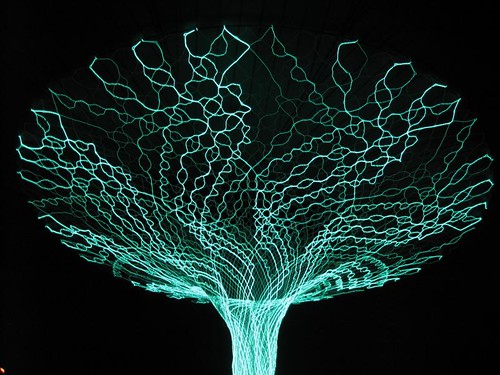
Sonumbra, 2009, by Loop.ph
We are looking for motivated design interns to join our team on an exciting new commission.
We have been commissioned by Kensington Palace to create a public lighting installation to be installed in early january.
The commission is based on our studio's Archilace technique - creating architectural scale lace work based on the palaces historic lace collection.
We are looking for people with a textile background and good experience with hand crafting and fibre work. Following training you will be working as a team on fabricating a large architectural scale piece of electronic lace.
We are looking for 3 people to work with us 2-3 days a week starting from 1st November until mid January.
This is a paid internship and based in our London studio in Stoke Newington N16.
If you would like to apply please send us an email outlining your experience and interest in working on the commission.
Please let me know if you have any questions at Loop@Loop.pH
Thursday, 20 October 2011
Writing a thesis

As some of us are entering the writting-up phase of our PhD, I would like to share with you some references about how to write a thesis. This is far from being an easy task and a bit of help is very welcome, though, one can easily be lost in the plethora of such literature, especially as no so many references deals with the specificity of writing a practice-based PhD.
I have lately discover How to write a better thesis by David Evans and Paul Gruba, and I have found it immensely valuable at this stage of the research as it is a very synthetic book focusing on the structuring of the thesis, providing very clearly and efficient guidelines and basic tips about using word appropriately for such a task. Not especially dedicated to practice-based and design-led PhD, one of the co-author is an architect, which make it very accessible.
How to write a thesis by Rowena Murray will also be a good friend, particularly useful in respect to writting schedule and how to engage with writting at different stages of the research.
As a starter, I would warmly recommand Visualizing Research: a guide to the research process in art and design by Caroline Gray. The book is not especially dedicated to the writing process but rather deals with different ways to handle a practice-based PhD, from the very first stages up to completion. It is an excellent introduction to the implications of PhD research. Comments are more than welcome to continue the discussion.
Monday, 26 September 2011
Yard Gallery Architectures Day's
 Copenhagen's Gallery Yard is presenting a selection of interesting works by young architects reflecting on how public spaces can be transformed into vibrant, participative and even environmental oasis in the city. Come and discover this exciting work byCity Sleeps (US), Filipa Valente (PT) Jacob Riiber (DK) Byen Sover (DK) and Anders Christiansen (DK) - who is also curator of the show. The opening is friday the 30th of september at 17h.
More info
YARD gallery
Refshalevej 163 A, st. th
DK – 1432 Copenhagen K
Monday, 19 September 2011
Exciting London Design Festival Workshops
 A flavour of Something Lab's workshop, more workshops on Puff & Flock's blog
 London-based textile lab Puff & Flock, has concocted a series of exciting workshops for this years London Design Festival. Hold at the fantastic Farmiloe building in Clerkenwel- this years' Designers Block venue- from 22nd to 25th of September, the workshops will be led by cutting-edge designers including Jennifer Ballie, the Something Lab or the recent formed Postextiles collective. Discover the whole programme and further details on Puff & Flock's blog.
At this occasion the Puff Up shop, a souvenir shop offering gorgeous goods, mostly limited editions, will be back. It will be located in the outside courtyard in the large inflatable cube courtesy of Inflate.
At this occasion the Puff Up shop, a souvenir shop offering gorgeous goods, mostly limited editions, will be back. It will be located in the outside courtyard in the large inflatable cube courtesy of Inflate.
If you have the chance to be in London, I would not miss these exciting events!
Monday, 18 July 2011
Art and Design Index to Thesis
If you are looking for thesis examples in the field of practice-based and design-led research, then this link will be of interest. It is far from being exhaustive but it gives a partial overview of works in this area.
'ADIT (Art and Design Index to Theses) has been set up with funding from the Arts and Humanities Research Council to provide a searchable resource of research degrees in Fine Art and Design. It aims to enable research students and their supervisors to build their understanding of the contribution that their research will make to their particular field of study.
'ADIT (Art and Design Index to Theses) has been set up with funding from the Arts and Humanities Research Council to provide a searchable resource of research degrees in Fine Art and Design. It aims to enable research students and their supervisors to build their understanding of the contribution that their research will make to their particular field of study.
Wednesday, 13 July 2011
When science talks about design
 Today, DTU's Chemical Engineering Department is celebrating the still unusal collaboration between scientists and designers with an article dedicated to my last responsive installation called Reef, fruit of a collaboration with electro-active polymers' specialist Guggi Kofod and interaction designer David Gauthier. Discover this nice feature entitled 'Shaping reality with electro-active polymers' in their 2010 annual report.
Friday, 27 May 2011
SPECIAL EFFECTS: TECHNOLOGY AND THE INTERIOR EXPERIENCE
INTERIORS: DESIGN, ARCHITECTURE, CULTURE - Berg Publishers
Call for Articles - Special Issue (Vol. 3 Issue 1 - 2012)
SPECIAL EFFECTS: TECHNOLOGY AND THE INTERIOR EXPERIENCE
The editors Anne Massey (Kingston University) and John Turpin(Washington State University) invite contributions to the journal's 2012 special issue SPECIAL EFFECTS: Technology and the Interior Experience. This issue will examine the impact of technology on the development of the interior and the accompanying human experience. As the 21st century unfolds, technological additions, integrations and interventions have become more pervasive altering our interface with the built environment and greatly impacting our perception of the world around us: requiring us to face reality on the one hand, and yet allowing us to slip into immersive fantasies on the other. The divisions between outside and inside have become more porous, with virtual worlds and lived experience colliding and coalescing. Gadgets for the home; technology and sustainable living; shopping and atmosphere; projecting digital place and the development of gendered technologies are all areas that are open for analysis from an interior studies perspective.
The editors welcome submissions of articles addressing the topic of the interior and technology broadly defined. Submissions reflecting the latest research on the interior from historians, practitioners and theorists are particularly welcomed. Principal articles of 5,000 to 7,000 words, including notes and references, with 4-8 illustrations are invited, and should be sent as an attachment to interiors@bergpublishers.com by 31st July 2010.
Further details of the Journal, including Notes for Contributors, are available at www.bergjournals.com/interiors
If you have any queries about the Journal or about submitting an article, please contact: interiors@bergpublishers.com
Wednesday, 6 April 2011
MAKING FUTURES

Final Call for abstracts. The closing date for receipt of abstracts is 1st May 2011.
Making Futures will be held on Thursday 15th and Friday 16th September 2011 at Dartington Hall on the inspiring Dartington Estate, Devon, UK.
Making Futures invites submissions from craft practitioners, curators, historians, theorists, campaigners, activists, and representatives from public and private agencies with an interest in the relationship between the contemporary crafts and sustainability issues.
CONFERENCE AIMS:
Making Futures is about agency, change and the search for new grounds and understandings of how the contemporary crafts are practiced in relation to developing global environmental and
sustainability agendas.
The conference explores the idea that these emerging agendas interrupt and restage the possibilities of craft in fundamental ways that are important to makers, their audiences, and to society more generally; that they present opportunities to redefine and reconstitute the crafts as less marginalised, more centrally productive forces in society, through new formulations and/or re-articulations of practices, identities, positions and markets.
All details about the call available here http://makingfutures.plymouthart.ac.uk
Thursday, 17 March 2011
Reef exhibited at 1:1 research by design

Reef is the design of a self-actuated ceiling questioning how adaptive minimum energy structures can contribute re-establishing home in a synergic relationship with nature. Composed by an archipelago of electro-active modules, Reef constantly re-designs its own landscape as its modules change shape according to the exterior. Like a sail, they open and close gradually following the pulse of the wind, materializing the invisible flow of energy that connects the inside with the outside. Like corals, Reef is calcifying over time as the supporting technology is becoming obsolete, transferring its actuation back to the inhabitant as natural airflow is invited to come in.
Reef is currently displayed as a part of the 1:1 research by design, an exhibition by Institute 4 at the Royal Danish Academy of Fine Arts, School of Architecture, Copenhagen until the 10th of April 2011. All the details about the exhibition here.
Design: Aurélie Mossé
Collaborators: Guggi Kofod, David Gauthier
Photography: Mathilde Fuzeau
With the precious help of Kristine Agergaard Jensen, Anca Gabriela Bejenariu, Lucie Benech, Aude Béranger, Liv Elbirk, Vibber Hermansen, Bori Kovacs, Jessica Meek, Paul Nicholas, Matteo Oliverio, Brady Peters, Martin Tamke.
Reef is currently displayed as a part of the 1:1 research by design, an exhibition by Institute 4 at the Royal Danish Academy of Fine Arts, School of Architecture, Copenhagen until the 10th of April 2011. All the details about the exhibition here.
Design: Aurélie Mossé
Collaborators: Guggi Kofod, David Gauthier
Photography: Mathilde Fuzeau
With the precious help of Kristine Agergaard Jensen, Anca Gabriela Bejenariu, Lucie Benech, Aude Béranger, Liv Elbirk, Vibber Hermansen, Bori Kovacs, Jessica Meek, Paul Nicholas, Matteo Oliverio, Brady Peters, Martin Tamke.
Wednesday, 16 March 2011
Smart Geometry

Smart geometry is a key event in the field of architecture. 'To the new generations of designers, engineers and architects, mathematics and algorithms are becoming as natural as pen and pencil. Smartgeometry promotes the emergence of this new paradigm in which digital designers and craftsmen, are able to intelligently exploit the combination of digital and physical media taking projects from design right through to production.'
This year the event is hosted by CITA in Copenhagen from 28th of March until 2dn of April. The event is organized around a series of workshops and conferences time, including the following speakers:
Ben van Berkel UN Studio
Usman Haque Haque Design + Research Studio
Billie Faircloth KieranTimberlake Director of Research
Craig Schwitter + Gijs Libourel Buro Happold + Adaptive Building Initiative
Lisa Amini IBM Smarter City Lab, Dublin
Find out more about the exciting programme on smart geometry.
Saturday, 12 February 2011
Smart Textiles Design Competition for Students

Textiles are leading the pack, this become more and more present. Check out this opportunity to win 6,500 EUR for Innovative Design with Smart Textiles
Click here to read the press release!
Contact information:
'A new ambitious project puts Denmark on the world map of smart textiles. The opening of the project is marked by an international prize competition for students with a prize of 6,500 EUR. Students from all over Europe are invited to take part, and the winner is found on 12 May 2011, when TEKO, VIA University College in Herning is host for a summit for international experts and companies working with smart textiles.'
Click here to read the press release!
Contact information:
Ms. Hanne Troels Jensen, Director, Knowledge Center for Smart textiles, Tel.: +45 87 55 05 47
E-mail: htj@viauc.dk
Tuesday, 1 February 2011
Call for participation / electro-active polymers

Do you want to find out more about smart materials? Aurélie proposes you an immersion in the world of electro-active polymers: plastics changing shape with electricity. As a part of her PhD exploring the boundaries between textiles and architecture, she is looking for benevolent(s) to assist her for the making of a responsive installation. The installation will consist in a ceiling surface made out of electro-active modules, changing shape according to wind intensity and direction. It will be displayed within the Royal Danish Academy of Fine Arts, School of Architecture, Copenhagen this coming month of March. Exhibition opens on the 11th of March and will be on until end of April.
Beyond the joys of team work, this is a great opportunity to discover the research environment CITA (Centre for IT & Architecture) as well as to get hands on and learn how to build electro-active modules. You will also get an insight on digital crafting methods, including laser-cutting and screen-printing techniques.
She would be happy to have help during these two key phases:
- 21rst of February – 6th of March: making of electro-active polymers
- 7th - 10th of March: setting up of the installation
If you are interested, please get in touch directly with Aurélie asp:
+45 50 36 62 38
Subscribe to:
Posts (Atom)
